

Same board. Same click and drag. Just a lot more under the hood.
The Smart Service you’ve run your company on for years is in Cloud — the board, the customers, the QuickBooks. What’s new is the help sitting around it: assistants that find the open slot, catch the double-booking before you do, and answer “who owes us money?” in plain English. Same company. Same software. A lot more horsepower.

Mission Control. Your Scheduler, grown up.
Open it and you’ll know exactly what to do: click, drag, schedule. Your Waiting List is there. Your Quick Entries are there. Color by whatever you like. What’s new is everything sitting around the calendar — five assistants that watch it with you.
Looks like your board. Acts like your board.
Day, Work, Week, Month, and a Dispatch view laid out like the one you run today. Click in a tech’s column, drag down to the end time, and the job is on the board. Double-click, it opens. Keyboard shortcuts if you’re that person. Then, when you’re ready, meet the five assistants below.
See Mission Control →Wingman Just ask it.
“Who’s overloaded tomorrow?” “Who has room for a two-hour job Friday?” Type it or say it. Wingman answers, proposes the move, and waits for your OK. It never touches the schedule on its own.
Intelligence A second set of eyes.
Double-bookings, a tech running late, a gap you could fill, a waiting-list job that fits today’s route — ranked Critical, Important, Opportunity, with a one-click fix.
Night Vision Finds the slot for you.
Type the address, pick the skills the job needs, say when the customer wants it — ASAP, tomorrow, this week — and it ranks your five best openings, scored on drive time, overtime risk, skill match and route fit. Pick one and it’s booked. Nothing fits today? Night Vision keeps watching and pings you the moment a slot opens.
Forecasting See next week today.
It learns your last eight weeks — busy Mondays, quiet Fridays, the seasonal swing — and colors every upcoming day by how full it really is. Orange is capacity you haven’t sold yet. Red means you’re headed for overtime. It updates itself as the week fills in, so you steer bookings instead of just taking the next open slot.
Optimization Less windshield time.
One click reorders a tech’s stops for the day and shows the miles and minutes saved before anything moves. Confirmed appointments stay put. And you do it right here — without leaving Mission Control.
More on Mission Control →Cloud-only. Every one of them.
Everything you run in Desktop today comes with you. Everything below is on top of that — none of it exists in Desktop.
The board goes where you go. Live on every screen.
Laptop at the kitchen table, iPad at the airport, phone in the bleachers. It’s the same Mission Control, and a job you move on one is moved on the others before you look up. Nothing to install, nothing to remote into, no office PC that has to stay on. Your techs move too — the Smart Service Cloud app takes iFleet’s place on their iPhones and iPads.
More on Smart Service Cloud →Customer Portal They pay — and book — from the couch.
Their own page. Open invoices paid by card or bank. Quotes approved and signed, deposit down, from the kitchen table. The next visit booked from the services and times you allow — and it lands on your board without anyone typing it in. Every past visit, invoice, photo and report in one place. Card on file for the regulars.
More on the Customer Portal →Collection Management Who to call first, every morning.
Your aging report tells you who’s late. This tells you who to call first. Every open invoice aged in one strip and ranked by the money most at risk — with promises, broken promises, disputes, credit limits and a daily work list your office actually works through. The follow-up finally has an owner.
More on Collection Management →Calls & follow-ups Every “maybe” lives somewhere.
One person at the front desk or a full call center — every call is logged with who took it, what they wanted, and what happens next. Managers see the whole team’s calls; each rep sees their own. Open quotes get a follow-up reminder on their own. Nothing rides on a sticky note.
Price Books The vendor’s catalog, right on the quote.
Your suppliers’ catalogs live inside the app — pictures, descriptions, product pages, even the product video. Open one right from the quote or work order, show the customer the options, tap Add Item, and the purchase order is one click away. Your Price Breaks come along too.
More on quoting →Task Boards For the work that isn’t a work order.
Plenty of your business doesn’t involve a wrench and a customer, and it still needs scheduling, organizing, and somebody owning it. Truck inspections. Onboarding the new guy. The permit pile. Drag it across the board; it moves itself as the work does.
More on Task Boards →Commissions Three days a month, back.
Per item, per tech, per plan. Calculated on the job, visible to the team all month, one report at the end. No spreadsheet fights on payday.
More on Commissions →Custom workflows Your way, automated.
When this happens, do that. Our team builds the automations around how you already run the shop, not the other way around.
More on custom development →Route Logistics Your routing, on steroids.
Optimizing a tech’s day lives in Mission Control. The Route Logistics Calendar is Desktop’s routing on steroids: recurring routes, each crew against its revenue and hours goal, color-coded, on one calendar with a map.
More on routing →Dashboards On the shop TV.
Live numbers, nine boards, rotating on the wall so the crew sees the score.
More on dashboards →Thirty minutes. Cloud, running. No slide deck.
Your questions, at your pace, with someone who knows Desktop as well as Cloud.
The Oracle. Ask. Don’t run reports.
You know the question. You just don’t want to build the report to answer it. Ask The Oracle in plain English and it comes back with the table, the chart, or the statement — from your live data.
Save the questions you ask every Monday and they rerun on fresh data.
Meet The Oracle →Writing Assistant. Every note sounds like your best day.
Your techs are great at the work and bad at the write-up. That’s fine now. One click turns the note into something you’d let a customer read — cleaner, shorter, friendlier, more formal, or in Spanish.
Knowledge Center. Thirty years of know-how, on the tablet.
Load the service manuals, the spec sheets, and the stuff only your senior guy knows. Now the new guy asks a question on site and gets the answer — page reference and all — instead of calling the shop.

Something you wish it did? Tell us.
A lot of what’s on this page started as a Cloud customer asking for it. New features ship frequently, and Cloud is where they land. The next one might be yours.
Change is a pain. Here’s what doesn’t change.
Nobody wakes up wanting new software. You want the business to run and the phone to stop. So here’s what Desktop customers actually ask us, answered straight.
“Why should I move if Desktop still works?”
Because it’ll keep working, and that’s all it’ll do. Everything new we’ve built in the last year — Mission Control, the assistants, the portal, Collection Management — landed in Cloud, and more keeps landing. Cloud is the future of Smart Service; Desktop is the past we’ll keep supporting.
“I’ve got fifteen years of customers in there.”
They all come. Customers, locations, jobs, equipment, history — our conversion tool moves Desktop data to Cloud automatically, and a person checks it with you before you go live.
“My office manager will kill me.”
She’s usually the first convert — hers is the phone that stops ringing. We train her first, in short sessions, and she decides when you flip.
“What if the internet goes down?”
Your phone is a hotspot and your techs are already on cellular. And the flip side: when the office PC dies at 4:50 on a Friday, the business is still up.
“I’m not switching QuickBooks.”
You don’t have to. Cloud works with QuickBooks Online and QuickBooks Desktop. Your books stay your books.
“Nothing changes until I say so.”
Correct. Desktop keeps running while you learn Cloud. You pick the go-live day.
“Who do I call?”
Same number, same building in Dublin, Ohio, same people who answer your Desktop calls today — nine out of ten of them live.
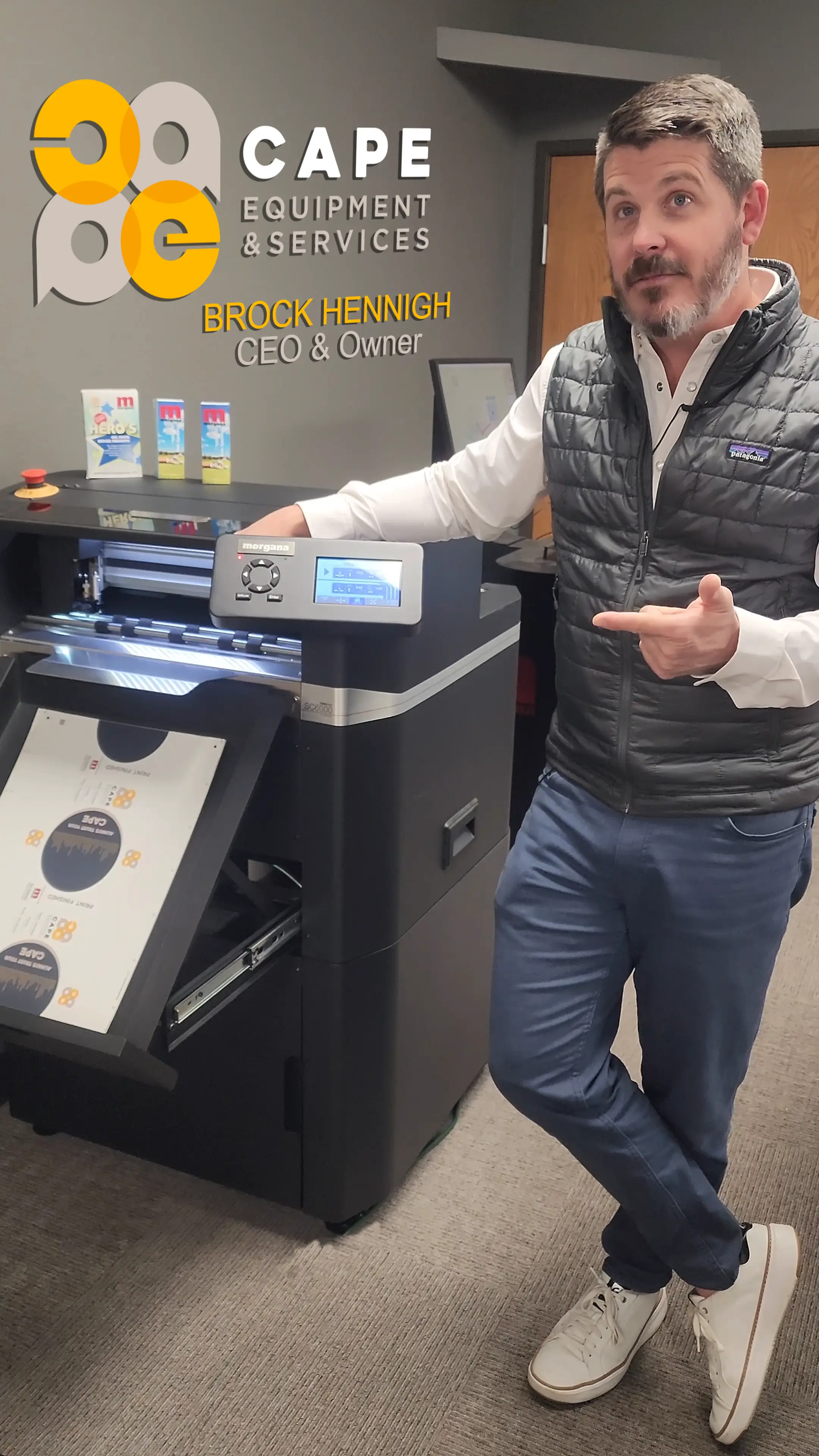
“Just by having Smart Service with this already built in, it’s been a game changer. It’s turbo fuel. Rocket fuel.”
Brock Hennigh · CEO & Owner, Cape EquipmentQuestions Desktop customers ask.
