


Using nitrogen gas for HVAC has become a popular choice for businesses that want to improve the efficiency of their HVAC systems. If you are in the industry, it is important to know where to buy it and equally important to understand how to use it.
In this article, we'll discuss the basics of nitrogen gas and how you can use it in your HVAC system. We'll also provide a list of reputable suppliers who can help you get started, as well as the benefits of using nitrogen in your HVAC system and some general facts and usage tips!
What Is Nitrogen
Nitrogen gas is a naturally occurring, invisible, odorless gas that makes up 78% of the Earth's atmosphere. It's also found in small amounts in other gases, such as argon and carbon dioxide. It is the most plentiful element in Earth's atmosphere and is a constituent of all living matter.
Why Is Nitrogen Used in HVAC Systems?
There are many benefits to using Nitrogen in HVAC systems. Nitrogen is non-toxic, odorless, and colorless, making it an ideal choice for many different applications. Nitrogen is also less expensive than other gases, making it a cost-effective option for businesses. It is also safe to use in many environments, including food processing plants and hospitals.
Nitrogen is an inert gas that doesn't react with other elements or compounds. This makes it safe to use in many different applications, including HVAC systems. Purging with nitrogen removes oxygen and moisture from the refrigerant lines, preventing oxidation and corrosion that would otherwise damage the system once it is running. Nitrogen can also be used to pressurize the system for leak detection before refrigerant is charged in.
Three of the most common uses of nitrogen in HVAC work are:
- Purging refrigerant lines before charging, to remove moisture and contaminants that would otherwise react with refrigerant oil.
- Pressure testing newly installed or repaired lines to verify there are no leaks before the system goes into service.
- Brazing copper under a low-pressure nitrogen flow, which prevents the inside of the pipe from oxidizing and forming brittle copper oxide flakes that could later clog the metering device or compressor.
Nitrogen gas is also typically less expensive than refrigerants and specialty gases, which is one reason it is the go-to choice for these tasks.
Is Nitrogen Gas Flammable?
Nitrogen is not flammable. It does the opposite. It displaces oxygen and is often used to suppress combustion in industrial settings. The pure gas itself will not burn, ignite, or explode.
The main safety concerns with nitrogen are asphyxiation and pressure, not fire. Because it is odorless and colorless, a leak in an enclosed space can quietly displace breathable air, so always work with nitrogen in well-ventilated areas. Nitrogen tanks are also charged to extremely high pressures, often 2,000 PSI or higher, so always use a regulator rated for nitrogen and never connect a tank directly to an HVAC system without one.
Liquid Nitrogen vs. Nitrogen Gas
To turn nitrogen gas into a liquid, you have to cool it to around -196°C, or -321°F. Pressure alone will not do it. The process is called liquefaction, and it is typically done by fractional distillation of liquefied air. Liquid nitrogen is used across a wide range of industries from cryogenics to food processing, and you can even find it at your local grocery store as the secret behind certain frozen treats.
When exposed to open air, liquid nitrogen evaporates quickly, which makes it extremely dangerous to handle without proper safety precautions. It can cause severe cold burns and tissue damage, so always wear cryogenic gloves and protective clothing when working with it. For storage, liquid nitrogen is held in special double-walled containers called dewars, which use vacuum insulation between the walls to keep the nitrogen cold and prevent evaporation. When you are ready to use it, pour it into a container or use a dedicated dispensing tool.
Where to Buy Nitrogen Gas for HVAC
Reaction Industries

Reaction Industries is a Nitrogen gas company located in the United States. They supply Nitrogen to all types of businesses, including those in the HVAC industry. They have a wide range of products and services, and their team is passionate about helping their customers succeed.
Matheson

MATHESON is a leading global supplier of Nitrogen gas. They offer many different grades and purities of Nitrogen, and they have a long history of providing quality products and outstanding customer service. They aim to create social value through innovative gas solutions that increase industrial productivity, enhance human well-being and contribute to a more sustainable future.
Air Products

Air Products is also a leading supplier of Nitrogen gas. Focused on serving energy, environment, and emerging markets. They provide essential industrial gases, related equipment, and applications expertise to customers in dozens of industries, including refining, chemical, metals, electronics, manufacturing, and food and beverage. They also have a team of experts who are dedicated to helping their customers succeed.
Airgas

If you are local to Columbus, Ohio then you can find Airgas off of Distribution Dr. Don't worry if you are not in Ohio though because they have distribution warehouses in all 50 states. Airgas, an Air Liquide company, is a leading single-source supplier of gases, welding equipment and supplies, and safety products.
With more than one million customers, Airgas excels at providing customers, large and small, with the following:
- Industrial, medical and specialty gases
- Welding equipment and supplies
- Safety products
- Atmospheric gases like Nitrogen, Oxygen, and Argon
- Carbon Dioxide
- Dry Ice
- Nitrous Oxide
- Ammonia
- Process Chemicals
Nitrogen is an essential gas for many industries, and many different suppliers can provide it. When choosing a supplier, it's important to consider factors such as price, quality, and customer service. Reaction Industries, MATHESON, Airgas, and Air Products are all leading suppliers of Nitrogen gas with years of experience in the industry. Visit their websites today to learn more about their products and services or to request a quote.
Flush and Pressure-Test With Nitrogen
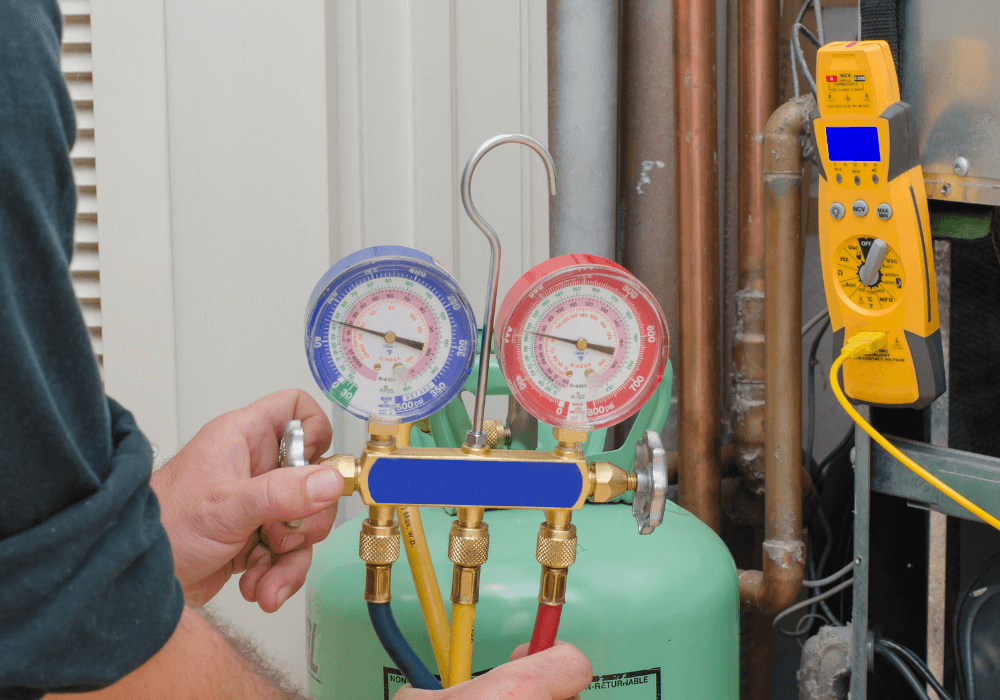
The exact procedure varies by system and the work being done, but the general workflow looks like this:
- Power down and isolate the system. Lock out the disconnect.
- Recover any existing refrigerant per EPA Section 608, which is required by law before opening the system.
- Connect a nitrogen tank with a regulator rated for nitrogen to the service port via a high-pressure charging hose.
- Set the regulator to a low pressure for purging, typically under 150 PSI, and let nitrogen flow through the system to displace moisture and contaminants.
- Cap and pressurize for leak testing. Pressures vary by system and refrigerant, so consult the equipment manufacturer's specs.
- Hold the pressure for at least 15 minutes and watch for any drops, which would indicate a leak.
Always follow the equipment manufacturer's procedures and your local code requirements. Refrigerant recovery and pressure testing are licensed work. If you are not EPA 608 certified, leave this to a qualified technician.
How Much Does Nitrogen Cost?
Compressed nitrogen gas for HVAC work is one of the more affordable industrial gases. Pricing depends on tank size, gas purity, and your supplier's contract. Most HVAC work uses standard or dry-grade nitrogen. Most HVAC suppliers will lease or sell cylinders, with a deposit on the cylinder plus a refill fee per fill. Bulk and contract pricing are typically far cheaper per cubic foot than one-off purchases.
Compared to refrigerant or specialty gases, nitrogen is a small line item on most jobs.
Is Nitrogen a Refrigerant?
Short answer: no, not in standard HVAC. Nitrogen is not used as a refrigerant in residential or commercial heating and cooling systems. Those systems run on dedicated refrigerants like R-410A, R-32, R-454B, and similar compounds engineered for vapor-compression cycles.
Nitrogen plays important supporting roles in HVAC work like purging, pressure testing, and brazing, but it does not replace refrigerant. The closest thing to "nitrogen as refrigerant" is liquid nitrogen used as a cryogenic coolant in specialized industrial freezing applications, like food processing or scientific use, which is a different category of equipment from HVAC.
If anyone ever pitches you on using nitrogen as a refrigerant in a standard HVAC system, treat it as a red flag.
In Summary
Nitrogen gas plays a critical supporting role in HVAC installation and maintenance. The most common uses are purging refrigerant lines to remove moisture and contaminants, pressure-testing for leaks, and protecting copper from oxidation during brazing. Nitrogen is inert and non-flammable, but it must be handled with respect for the high pressures involved and the asphyxiation risk in enclosed spaces.
It can be purchased from many suppliers, and it is important to follow the correct procedure for flushing and pressure-testing an HVAC system.
Smart Service for HVAC
If you are running an HVAC business and want software built for HVAC contractors that handles scheduling, dispatch, customer history, mobile invoicing, and recurring service contracts, Smart Service integrates with QuickBooks and keeps your techs in the field synced with the office — through the Cloud mobile app, or iFleet if you run Desktop. Try a free demo to see how it fits!


