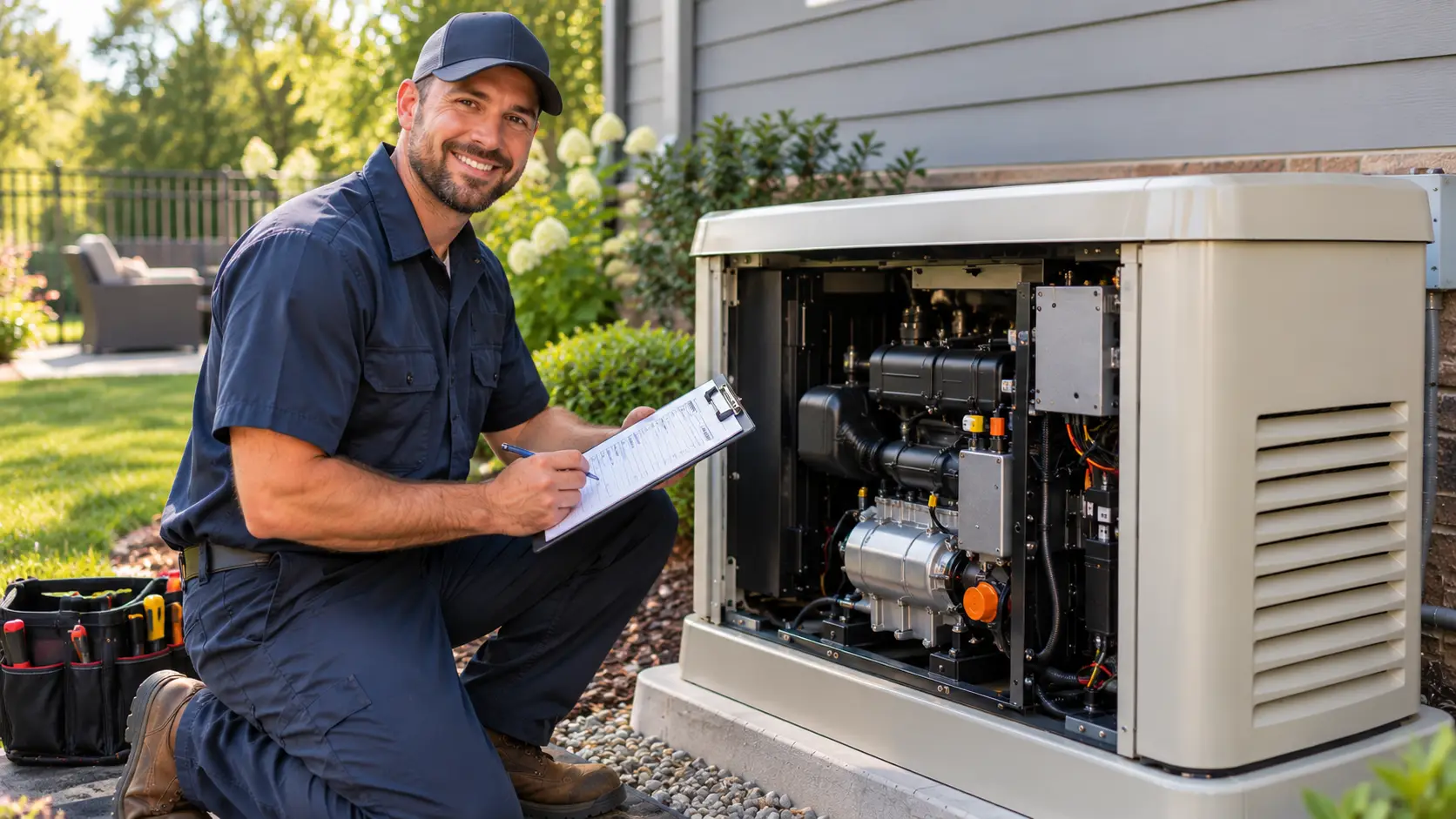
A plumbing service business plan looks a lot like the pipework in the photo: tightly interconnected, every section feeding the next, no piece of it standing alone. The Service Plan sets what work the business takes. The Operating Plan describes how that work gets done. The People Plan decides who does it. The Marketing Plan sources the calls. The Financial Plan keeps the lights on. Pull a section out and the others stop carrying water.
The business plan does not need to be a forty-page document. The plumbing contractor who can describe each of the five sections below in a few paragraphs has a working plan. The version below walks through what each section covers, what the questions inside each section look like, and which operational decisions follow from getting each one right.
The driver: a working plumbing business plan is what makes the business legible to the people whose decisions depend on it. Lenders looking at a loan request. Insurance underwriters quoting the policy. Senior technicians considering joining the operation. The plan is the document that turns the business from a one-truck operator's intuition into something a third party can underwrite.
The Service Plan
The first section of a plumbing service business plan describes what the business actually does. The residential, commercial, and new-construction mix. The service lines: drain cleaning, water heater installs, repipes, leak detection, fixture replacements, sewer line work, gas line work, backflow testing, and on and on. The geographic footprint: which zip codes the trucks cover from which dispatch base. The customer profile: homeowners, property managers, general contractors, restaurant operators, healthcare facilities, schools.
The Service Plan also sets the pricing structure. Flat-rate per job, time-and-materials, service-call fee plus diagnostic, or a hybrid. The plumbing contractor who has worked out the pricing math in advance bills more consistently than the one who guesses on every estimate. Most established residential plumbers settle on flat-rate pricing built off a software-published price book that the technician hits in the field, while new operators often start time-and-materials and migrate to flat-rate once they have data on actual job times. The buy a plumbing business guide covers the service-mix questions that pair with the broader market-positioning side of the plan.
The Operating Plan
The Operating Plan describes the day-to-day mechanics of how the work gets done. The dispatch base or home office. The truck count, truck stock, and parts inventory model: truck-stocked rolling inventory or warehouse pick-up at the start of every shift. The software stack: field service management, accounting, payroll, scheduling, customer history, mobile invoicing. The communication infrastructure: phones, dispatch boards, technician mobile apps, after-hours coverage.
Several decisions inside the Operating Plan compound across years.
The software stack. Choosing field service management software and accounting software early prevents the operator from being locked into clunky spreadsheets later. Most successful residential plumbing operations land on a paired system: a field service management platform such as Smart Service, ServiceTitan, or Housecall Pro integrated with QuickBooks or another accounting platform. The mobile apps for plumbing businesses guide covers the category breakdown and the flexible job scheduling software guide covers the scheduling-side decision.
The customer record discipline. The customer history the office builds across the first two or three years is the asset that supports the recurring service plan side of the business. The customer who got a water heater installed in 2024 is the customer who needs another one in 2034, and the operation that captured that record at the install gets the call ten years later. The customer list management workflow covers the discipline.
Quality assurance and callback rates. Operations that build callback tracking into their dispatch software from day one consistently report lower callback rates than operations that wait. The quality assurance guide covers the audit-and-feedback discipline.
The People Plan
The People Plan answers who works in the operation and how the team grows. The starting team is usually the founder plus a small handful of technicians, sometimes with a part-time office administrator. The hiring sequence describes when the operator expects to add the second technician, the third, the dispatcher, the office manager, and the operations manager.
The hardest hire in any plumbing operation is the senior technician with both technical skill and customer-facing soft skills. The labor market for licensed plumbers has been tight across the last several years and the trend is not reversing. Operators planning ahead build internal apprentice-to-journeyman-to-master pipelines rather than relying exclusively on poaching senior technicians from competitors. The technician development guide covers the career-touchpoint framework for growing technicians internally, and the labor shortage piece covers the broader trade-labor context shaping plumbing hiring through 2026.
The Marketing Plan
The Marketing Plan is the section of the business plan that explains where the next customer comes from. Vague answers here lead to vague results in the bank account. The operator who can name each channel, the rough cost per lead from each channel, and the conversion rate from lead to job is the operator who can scale the marketing spend.
A working plumbing Marketing Plan covers the channel mix and the annual budget. The channel mix includes Google Business Profile, Local Service Ads, Google Search Ads, organic SEO on the website, customer reviews discipline, referral programs, neighborhood door-hanger and yard-sign work, fleet branding, and email or SMS retention campaigns to past customers. The online marketing playbook covers the channel-by-channel mechanics, and the annual marketing plan guide covers the budget-and-calendar discipline that sits inside the Marketing Plan section.
The marketing budget benchmark for established residential service operators runs in the range of four to six percent of revenue, with growth-mode operators running seven to ten percent. The Marketing Plan section of the business plan should name the percent of revenue the operation is committing and the rough channel split underneath that number.
The Financial Plan
The Financial Plan section is the part lenders actually read. It covers projected revenue, projected operating expenses, projected profit, the capital stack of cash on hand and lines of credit and equipment loans and vendor terms, and the runway calculation. It also covers pricing math: the gross margin on labor, the markup on parts, the overhead absorption math, and the breakeven revenue per truck per month.
Three numbers anchor most residential plumbing financial plans.
Revenue per truck per year. Healthy residential plumbing operations target two hundred fifty thousand to four hundred thousand dollars per truck per year depending on service mix and geography. The operator who knows the target and tracks against it monthly is the operator who notices when a truck is underperforming.
Gross margin on labor. Labor is the largest controllable cost in plumbing. Operations that bill labor at three to four times the technician's loaded hourly cost typically have the gross margin headroom to fund marketing, equipment replacement, and growth. Operations billing at less than that struggle to invest in any of those categories.
Net profit margin. Established residential plumbing companies generally target ten to fifteen percent net margin. Operations under five percent are usually undercharging or over-staffing, and operations over twenty percent are either exceptional or under-investing in the marketing and capacity that drives future growth.
The QuickBooks inventory and accounting guide covers the bookkeeping layer the Financial Plan ultimately runs through.
The Review Cadence
A plumbing business plan written once and stuck in a drawer becomes outdated within a year. The operations that get value out of the plan write a quarterly review into the calendar and a full annual rebuild into the year-end cycle.
The quarterly review compares actual revenue, actual costs, actual hires, and actual marketing spend against the plan. Variance items get flagged. The annual rebuild revisits the underlying assumptions of the service mix, the geography, the team plan, the marketing channels, and the financial targets, and adjusts the plan to current reality. The discipline keeps the plan from becoming a document that exists for the bank file rather than for the business.
When the Business Plan Pays Off
A working plumbing business plan pays off in three places. The first is access to capital. Lenders, investors, and even commercial leasing companies all underwrite to the plan. The contractor who walks in with a tight, current, defensible plan gets better terms than the one who walks in with intuition. The second is hiring leverage. Senior technicians considering a move want to see where the operation is going, and a written plan shows them that. The third is the operator's own clarity. The contractor who has actually written down the service mix, the operating stack, the team plan, the marketing engine, and the financials makes better decisions on the truck and at the kitchen table than the contractor who has not.
The business plan is the underlying document, and everything else in the operation is downstream of it. Get the plan tight and the daily operating decisions get easier; leave it vague and every decision becomes its own ad hoc analysis. The pipework metaphor holds at the end of the document as well as the beginning: each section connects to the next, and the operation that has all of them tightened together carries water through the years where the operation with loose joints leaks revenue out of the gaps.
Smart Service for Plumbing
If you are running a plumbing business and want software for plumbing contractors that handles scheduling, dispatch, customer history, mobile invoicing, recurring service contracts, and the parts-and-job record-keeping plumbing operations need, Smart Service integrates with QuickBooks and keeps your techs in the field synced with the office — through the Cloud mobile app, or iFleet if you run Desktop. Try a free demo to see how it fits!